Sulfate-Free, But at What Cost? The Replacement Surfactants Hiding in Your 'Clean' Shampoo
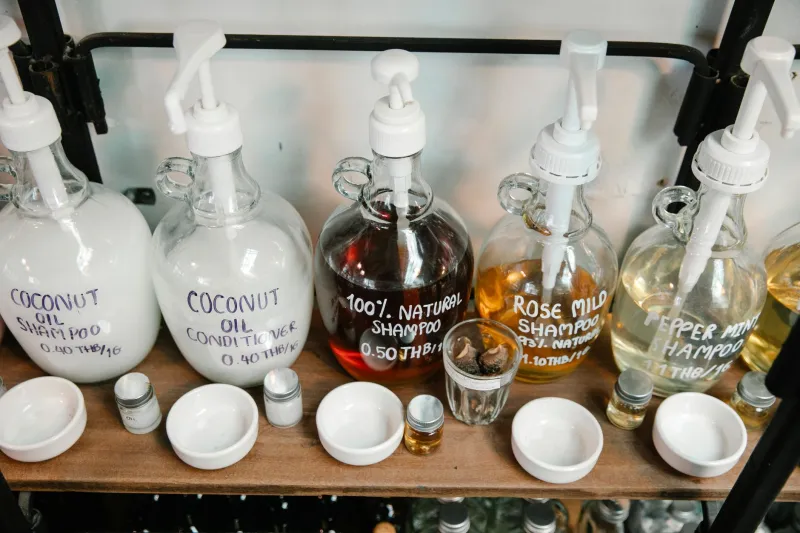
For the better part of a decade, the phrase "sulfate-free" has functioned as a kind of shorthand for safety in the hair care market. Consumers have absorbed the message clearly: sulfates—particularly sodium lauryl sulfate (SLS) and sodium laureth sulfate (SLES)—are harsh, potentially irritating, and best avoided. The personal care industry responded swiftly to that sentiment, flooding shelves with reformulated products bearing the sulfate-free designation as a badge of purity. Sales surged. Confidence followed.
What largely escaped scrutiny, however, was the question no one thought to ask loudly enough: what, precisely, replaced them?
The answer is complicated, and for conscientious American consumers who have organized their purchasing decisions around the sulfate-free label, it warrants serious examination.
The Problem With Defining Progress by Subtraction
Removing an ingredient is not the same as improving a formulation. This distinction sits at the heart of what Purity Solutions has long identified as one of the more pervasive patterns in the wellness marketplace—the tendency of manufacturers to define product improvement through absence rather than through the quality of what remains.
When sulfates were singled out by consumer advocates and dermatologists for their capacity to strip natural oils, cause scalp irritation, and contribute to color fade in treated hair, the industry faced a choice: engage in the slow, expensive work of genuinely cleaner chemistry, or find alternative surfactants that could replicate the lathering and cleansing performance of SLS while allowing a "free-from" label claim. For many brands, the latter path proved far more commercially attractive.
The result is a category of shampoos that carries the marketing language of safety while introducing a set of ingredients that have received far less independent scrutiny than the ones they replaced.
Meet the Substitutes
Sodium Coco Sulfate (SCS) is among the most common replacements, and it presents an immediate problem of transparency. SCS is derived from coconut oil and is frequently marketed under the logic that coconut-derived equals gentle. However, SCS is a mixture of fatty acid sulfates—and sodium lauryl sulfate itself is a component of that mixture. In other words, some products marketed as sulfate-free contain SCS, which includes the very compound consumers believed they were avoiding. The labeling is technically defensible; the communication is functionally misleading.
Cocamidopropyl betaine (CAPB) is another widely used alternative, classified as an amphoteric surfactant and often described as mild. The American Contact Dermatitis Society named it Allergen of the Year in 2004, a designation reflecting the frequency with which it triggered contact allergy reactions in clinical settings. While its overall sensitization rate is considered moderate rather than severe, it is not the hypoallergenic solution many consumers assume it to be, particularly for those with sensitive skin or existing dermatological conditions.
Sodium lauroyl methyl isethionate and related isethionate-based surfactants have gained considerable traction as premium sulfate alternatives, marketed heavily in the professional and prestige hair care segments. These compounds do exhibit a more favorable irritation profile in some studies. Yet the broader picture of their environmental fate—how they degrade in aquatic systems, what byproducts that degradation produces, and how they interact with wastewater treatment infrastructure—remains inadequately studied at scale. Regulatory data requirements have not kept pace with commercial adoption.
PEG-derived surfactants, such as PEG-40 hydrogenated castor oil, are frequently found in sulfate-free formulations as secondary cleansing or conditioning agents. Polyethylene glycol compounds carry a well-documented concern: the manufacturing process can result in contamination with 1,4-dioxane, a probable human carcinogen according to the U.S. Environmental Protection Agency. The FDA has monitored 1,4-dioxane levels in cosmetics and has issued guidance encouraging manufacturers to reduce it, but no mandatory limit currently exists in federal law.
The Regulatory Vacuum That Enables the Swap
The United States continues to operate under a cosmetic regulatory framework that is, by international standards, remarkably permissive. The FDA does not require pre-market safety approval for cosmetic ingredients, and the burden of demonstrating harm falls largely on regulators and consumers rather than on manufacturers. The Modernization of Cosmetics Regulation Act of 2022 represented a meaningful step forward, granting the FDA expanded authority over cosmetic safety, but its full implementation is ongoing and its reach has limits.
In this environment, the sulfate-free reformulation wave was able to proceed largely without independent verification that the replacements were, in fact, safer. Brands were not required to demonstrate that alternative surfactants posed lower risk to human health or aquatic ecosystems. They were required only to list ingredients accurately—a standard that, as the sodium coco sulfate example illustrates, does not always translate into meaningful consumer understanding.
What Environmental Advocates Are Watching
Beyond individual health concerns, the environmental dimension of this substitution deserves attention. Surfactants, by their nature, are designed to interact with both water and oil—a property that makes them highly effective cleansers and highly persistent travelers through water systems. When they exit your shower drain, they enter municipal wastewater streams, and their ultimate fate depends on the efficiency of treatment infrastructure and the biodegradability of the specific compound.
Some alternative surfactants, including certain glucoside-based compounds like coco glucoside, do demonstrate favorable biodegradability profiles and are generally regarded as environmentally preferable. But these are not uniformly adopted across the sulfate-free category. Many formulations blend multiple surfactants, including compounds with less favorable environmental profiles, without any obligation to communicate that complexity to the consumer.
The cumulative effect of millions of American households rinsing sulfate-free shampoos down the drain each day—with no clear picture of what those collective formulations contain—represents an understudied dimension of household chemical exposure in waterways.
Reading Labels More Critically
For consumers committed to making genuinely informed choices, a few practical orientations are worth adopting.
First, treat "sulfate-free" as a starting point for inquiry, not a conclusion. The presence of that claim tells you one thing about what a product does not contain; it tells you nothing reliable about what it does.
Second, look specifically for sodium coco sulfate on ingredient lists if you are attempting to avoid SLS. The two are chemically related, and the distinction is not always surfaced in product marketing.
Third, consult independent databases. The Environmental Working Group's Skin Deep database, while not a regulatory authority, provides hazard assessments for thousands of cosmetic ingredients and can help contextualize unfamiliar surfactant names.
Finally, recognize that some glucoside-based and isethionate-based surfactants genuinely do represent improvements over SLS in certain respects—the issue is not that all alternatives are equivalent to the original, but that the marketing framework surrounding "sulfate-free" provides no mechanism for distinguishing between them.
The Obligation to Go Further
The sulfate-free movement emerged from legitimate concerns about ingredient safety, and those concerns were not unfounded. Sodium lauryl sulfate does have a well-documented irritation profile, and consumers were right to question it. The failure lies not in the impulse to seek better formulations, but in a marketplace and regulatory system that allowed the language of safety to outpace the substance of it.
Purity Solutions holds that genuine progress in consumer health requires more than the strategic removal of a named ingredient. It requires transparency about what fills the space that removal creates—and accountability for ensuring that the replacement is, by measurable standards, actually better. Until the hair care industry embraces that standard, the sulfate-free label will remain a promise that the fine print frequently does not keep.