Labeled Safe, Still Toxic: The Flame Retardant Problem Lurking Inside Your Baby's Nursery
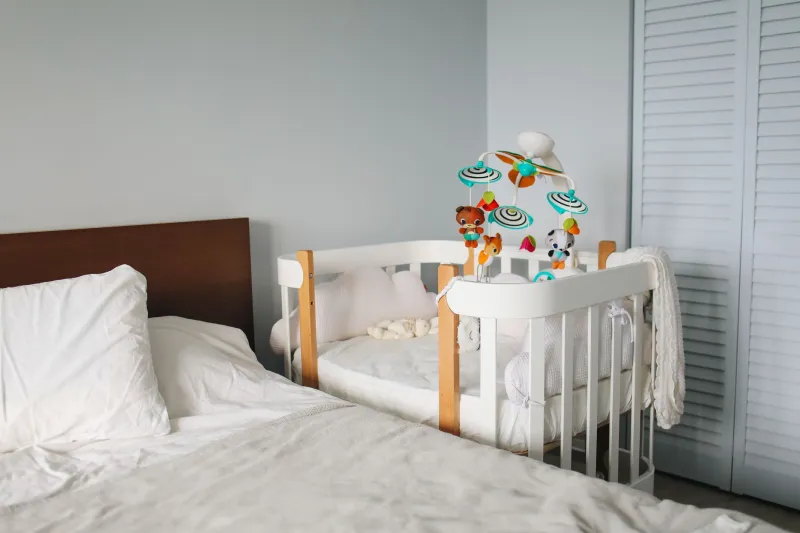
When parents begin preparing a nursery, the impulse to protect is absolute. Every purchase is scrutinized, every label read twice. Crib mattresses are evaluated for firmness. Paint is checked for VOC content. And somewhere on the tag of a changing table or the packaging of a foam mattress pad, the words "non-toxic" appear—and a certain anxiety is allowed to dissolve.
That dissolution may be premature.
A growing body of research, alongside ongoing regulatory battles at both the federal and state levels, reveals that the "non-toxic" designation on baby furniture is frequently a marketing construct rather than a verified safety standard. Beneath it, in the foam padding, the polyurethane cores, and the treated fabric covers, flame retardant chemicals continue to appear—some of them banned years ago, others technically legal but scientifically contested, and nearly all of them capable of migrating out of furniture and into the bodies of the children sleeping nearby.
The Regulatory Gap That Manufacturers Exploit
The United States has no single, binding federal standard that defines what "non-toxic" means on a consumer product label. The Consumer Product Safety Commission has authority over certain product categories, and individual states—California most notably—have enacted their own restrictions on specific flame retardant compounds. But the patchwork nature of this regulatory landscape creates significant room for ambiguity.
For decades, furniture manufacturers were required by flammability standards to treat foam materials with chemical flame retardants. California's Technical Bulletin 117, long the de facto national standard because of the size of the California market, effectively mandated chemical treatment of foam. When the standard was revised in 2013 to allow barrier-based compliance rather than chemical treatment, many manufacturers did not immediately reformulate their products. Supply chains are slow to change, and chemical treatments already integrated into manufacturing processes are not easily abandoned.
The result is a market in which products manufactured before reformulation—or sourced from suppliers who had not yet transitioned—continued to move through retail channels for years after the regulatory shift. Legacy inventory does not expire. It sells.
What the Chemicals Are, and Where They Go
The flame retardant compounds of greatest concern belong to several chemical families. Organohalogens, including polybrominated diphenyl ethers, or PBDEs, were among the most widely used and are among the most thoroughly studied. Certain PBDE formulations were phased out voluntarily by manufacturers in the early 2000s and subsequently banned in a number of states, yet they continue to appear in dust samples collected from American homes—a testament to how long these chemicals persist in indoor environments once introduced.
When foam breaks down over time, or is compressed through ordinary use, chemical compounds migrate into household dust. Infants and toddlers, who spend substantial portions of their day in contact with floors and soft furnishings, and who engage in the hand-to-mouth behavior characteristic of early childhood, are exposed through ingestion and inhalation at rates far exceeding those of adults in the same environment. Body burden studies—research measuring chemical concentrations in biological samples—have consistently found elevated levels of flame retardant metabolites in young children compared to their parents.
The health implications are not theoretical. PBDEs have been associated with disruption of thyroid hormone function, which plays a critical role in neurological development. Emerging research has linked early-life exposure to alterations in cognitive development, attention, and motor function. Other flame retardant compounds, including organophosphate-based replacements introduced after PBDE bans, carry their own profiles of concern—some classified as possible carcinogens, others flagged for reproductive toxicity.
Why the Labels Still Mislead
The persistence of misleading labeling is not accidental. "Non-toxic" carries no legal definition in the furniture context. Manufacturers may apply it freely, without third-party verification and without disclosing the full chemical composition of the materials used in their products. Certification programs exist—GREENGUARD Gold, OEKO-TEX, and CertiPUR-US among them—but their scope and stringency vary considerably.
CertiPUR-US, for instance, certifies foam and prohibits certain PBDE formulations, but its testing protocols do not screen for the full range of replacement flame retardants now in use. OEKO-TEX Standard 100 applies primarily to textiles and does not address the foam or structural components of furniture. GREENGUARD Gold is among the more rigorous certifications for chemical emissions, but it evaluates off-gassing rather than the presence of persistent chemicals that may migrate through dust rather than air.
None of these certifications, individually or together, constitute a guarantee that a product is free of all flame retardant chemicals of concern. They represent partial assurances, each with its own methodological limits—and none of them are required by law.
What Parents Should Actually Ask
Navigating this landscape requires moving beyond label-reading into active inquiry. Several practical approaches can meaningfully reduce exposure risk.
First, seek manufacturers who provide explicit written disclosure that their products contain no added flame retardants of any class—not simply that they meet current flammability standards through barrier methods or inherently flame-resistant materials. This distinction matters. Compliance with flammability standards and freedom from chemical treatment are not the same thing, and manufacturers who have genuinely eliminated chemical retardants from their products are generally willing to say so directly.
Second, prioritize certifications that address multiple chemical categories simultaneously. A product carrying both GREENGUARD Gold certification and a manufacturer's explicit no-added-flame-retardant declaration offers a stronger basis for confidence than a single certification alone.
Third, consider materials. Wool and latex, for example, possess inherent flame resistance and do not require chemical treatment to meet standard flammability requirements. Mattresses and mattress pads made with these materials—and certified to verify their composition—represent a structurally different risk profile than chemically treated polyurethane foam.
Finally, recognize that secondhand nursery furniture carries particular risk. Products manufactured before 2013 almost certainly contain legacy flame retardants. Even products from the years immediately following the California standard revision may reflect supply chain lag. The appeal of cost savings through secondhand purchases is understandable, but the chemical history of older foam furniture is not retrievable from visual inspection.
The Broader Accountability Problem
The flame retardant issue in baby furniture is, at its core, a story about accountability gaps. It is a story in which the regulatory framework has not kept pace with the marketing vocabulary, in which certification programs serve as partial proxies for standards that do not exist, and in which the burden of navigating chemical risk has been transferred, quietly and without acknowledgment, from manufacturers and regulators to individual parents.
Conscious consumers deserve better than that arrangement. They deserve transparent ingredient disclosure, enforceable definitions for safety claims, and regulatory standards that apply uniformly across the market rather than varying by state. Until those structures exist, the work of protecting infants from chemical exposure falls disproportionately on the families least equipped—by time, resources, or technical knowledge—to perform it.
The nursery should be a place of genuine safety, not the appearance of it. Achieving that requires holding the label to a higher standard than the label currently holds itself.