Killing Too Well: How the Hand Hygiene Habit Is Quietly Breeding the Bacteria It Was Meant to Destroy
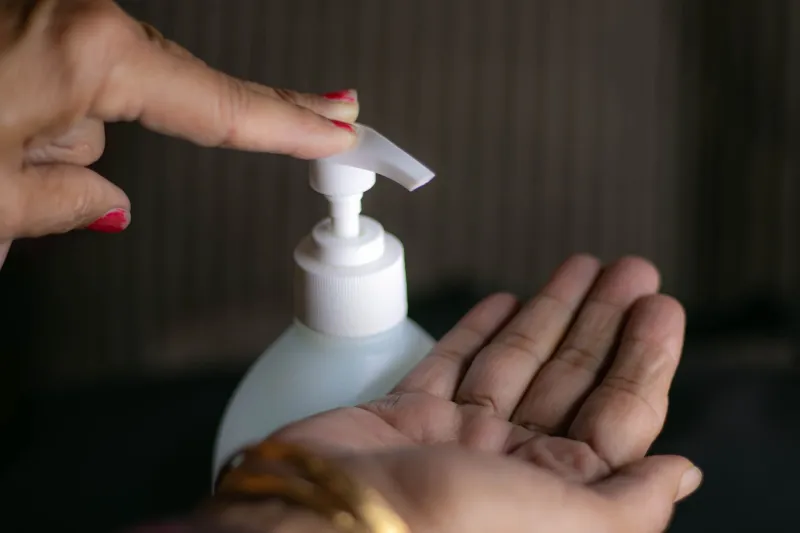
For the better part of two decades, hand sanitizer dispensers have multiplied across American life — affixed to school cafeteria walls, bolted beside hospital elevator buttons, tucked into the cup holders of minivans. The pandemic accelerated what was already a deeply embedded cultural reflex: when in doubt, sanitize. The logic seemed airtight. Kill the bacteria. Prevent the illness. Protect the household.
But biology, it turns out, does not honor simple logic. A growing body of research in microbiology and infectious disease is documenting an uncomfortable counternarrative — one in which the very products designed to protect American families from bacterial threats may be quietly selecting for microorganisms that are harder, not easier, to defeat.
The Triclosan Legacy
To understand the problem, it helps to begin with triclosan, a synthetic antimicrobial compound that spent decades as a workhorse ingredient in antibacterial hand soaps, toothpastes, and household cleaners. The U.S. Food and Drug Administration banned its use in over-the-counter consumer soaps in 2016, citing insufficient evidence of safety and growing concern about its contribution to antimicrobial resistance. That regulatory action was notable precisely because such decisive intervention is rare.
Triclosan works by targeting a specific enzyme involved in bacterial fatty acid synthesis. The problem with targeting a single biological mechanism is evolutionary: bacteria reproduce rapidly, and any individual organism carrying a mutation that interferes with triclosan's binding site survives, reproduces, and passes that advantage to its descendants. What begins as a cleaning product becomes, over repeated exposures, a selection pressure. The weak die. The resistant thrive.
What made triclosan particularly alarming to researchers was not merely its direct resistance-inducing effects, but its cross-resistance implications. Studies published in peer-reviewed journals, including work featured in the journal Antimicrobial Agents and Chemotherapy, found that bacteria exposed to triclosan developed resistance mechanisms that also conferred reduced susceptibility to clinically important antibiotics, including ciprofloxacin. The household soap and the hospital antibiotic were, in a sense, fighting the same fight — and losing it together.
Alcohol-Based Sanitizers: A Different Mechanism, a Different Risk Profile
With triclosan largely removed from consumer products, alcohol-based hand sanitizers — typically formulated with ethanol or isopropanol at concentrations between 60 and 95 percent — became the dominant alternative. Their mechanism of action is fundamentally different: rather than targeting a specific cellular pathway, alcohol denatures proteins and disrupts bacterial membranes broadly and rapidly. This non-specific action was long thought to make resistance development essentially impossible.
That assumption is now being challenged. Research published in 2018 by scientists at the Doherty Institute in Melbourne documented the emergence of Enterococcus faecium strains in Australian hospitals that demonstrated measurable tolerance to alcohol-based hand sanitizers. Critically, these strains had become dominant over a period during which hospital alcohol sanitizer use had increased dramatically. The researchers identified specific genetic mutations that appeared to enhance bacterial membrane integrity in the presence of alcohol — a finding that, while still contested in its broader applicability, fundamentally disrupted the scientific consensus that alcohol-based products were resistance-proof.
For American consumers, this research carries a specific implication: the conditions that allowed resistant enterococcal strains to emerge in clinical settings — high-frequency, high-volume product use — are increasingly replicated in domestic environments where sanitizer application has become habitual rather than strategic.
The Agricultural Parallel
Public health advocates have long drawn comparisons between antibiotic overuse in industrial agriculture and the resistance crisis in clinical medicine. The parallel to consumer sanitizer overuse is structurally similar and equally instructive.
In agricultural settings, antibiotics administered at sub-therapeutic doses to promote livestock growth do not eliminate bacterial populations — they expose them to concentrations insufficient for complete eradication, creating ideal conditions for resistance selection. Consumer hand sanitizers, applied improperly, infrequently enough to leave surviving populations, or at diluted concentrations from nearly-empty bottles, can replicate this dynamic in miniature. The home bathroom becomes, in a modest but meaningful sense, a petri dish subject to the same evolutionary pressures that have made drug-resistant infections one of the defining public health crises of this century.
The Centers for Disease Control and Prevention estimates that antimicrobial-resistant infections claim approximately 35,000 American lives annually. While the primary drivers of that figure remain clinical antibiotic misuse and hospital-acquired infections, environmental contributors — including household antimicrobial product use — are increasingly recognized as components of a systemic problem that cannot be solved in isolation.
What the Experts Actually Recommend
Dermatologists and infectious disease specialists are largely aligned on a recommendation that may surprise consumers conditioned by decades of sanitizer marketing: for routine, everyday hand hygiene in domestic settings, plain soap and water remains the gold standard.
The mechanical action of washing — friction, rinsing, the physical removal of microbial load — does not depend on killing bacteria. It depends on dislodging and removing them. This distinction matters enormously from a resistance standpoint: a bacterium that has been rinsed down a drain cannot reproduce; a bacterium that has survived a chemical assault can.
Alcohol-based hand sanitizers retain a legitimate and important role in specific contexts — when soap and water are genuinely unavailable, in healthcare settings where rapid repeated hand decontamination is necessary, or during active gastrointestinal illness outbreaks caused by certain bacterial pathogens. What they are not, according to infectious disease guidance, is a superior substitute for soap and water in the average American kitchen or bathroom.
Experts also caution against the use of antibacterial soaps containing quaternary ammonium compounds — benzalkonium chloride and its relatives — which have largely replaced triclosan in the post-2016 consumer market and carry their own emerging resistance concerns. The FDA's 2016 ruling, it should be noted, did not cover all antimicrobial ingredients, leaving a regulatory gap that several of these compounds continue to occupy.
Rethinking the Hygiene Calculus
Purity Solutions has consistently argued that genuine consumer protection requires looking beyond label claims and marketing reassurances to the underlying science. The sanitizer paradox is a case study in how products designed to solve a problem can, under conditions of overuse and misapplication, become contributors to a larger one.
This is not an argument against hand hygiene. It is an argument for precise, evidence-based hand hygiene — one that reserves powerful antimicrobial tools for situations that warrant them, rather than deploying them reflexively against every doorknob and grocery cart handle. The goal of a cleaner, healthier home is not served by creating invisible selective pressures that strengthen the very organisms we are trying to suppress.
Washing hands with plain soap for twenty seconds, drying thoroughly, and reserving alcohol-based sanitizers for genuine necessity is not a compromise. According to the best available evidence, it is the more protective choice — for individual households and for the broader microbial ecosystem that American public health depends upon.