Every Load of Laundry Is a Pollution Event: The Microfiber Crisis Your Washing Machine Is Quietly Fueling
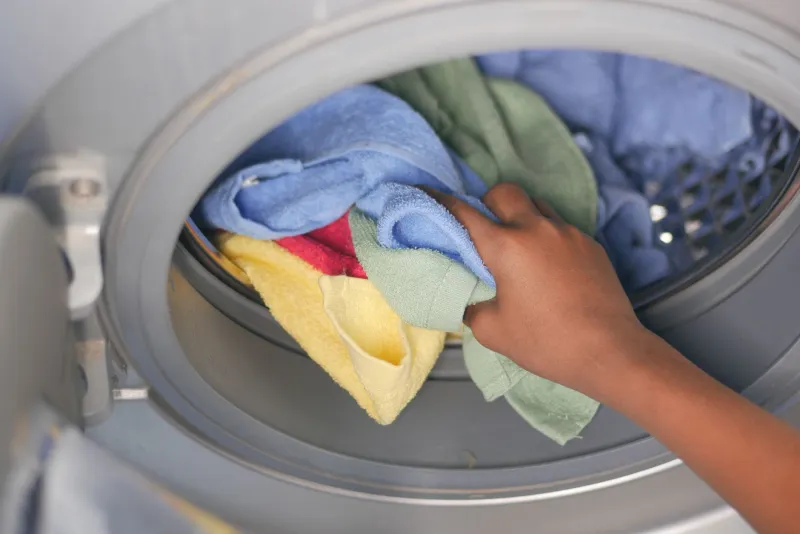
There is a particular comfort in the sound of a washing machine completing its cycle—the sense that something has been made clean, restored, set right. What that sound does not convey is the simultaneous release of hundreds of thousands of microscopic plastic strands into the water supply. This is the microfiber problem, and it has been accumulating in rivers, coastal sediments, and marine organisms for decades while public awareness has lagged far behind the science.
For American households, where synthetic fabrics—polyester, nylon, acrylic, spandex—constitute a dominant share of everyday clothing, athletic wear, and home textiles, the washing machine has become one of the most consequential sources of microplastic pollution. The question is no longer whether this is happening. The question is what, if anything, can realistically stop it.
What Microfibers Are and Why They Persist
Microfibers are filaments shed from textile surfaces during mechanical agitation—the kind that occurs in every standard wash cycle. Unlike larger plastic debris, these strands typically measure less than five millimeters in length, with many falling well below one millimeter. Their size is precisely what makes them dangerous: they are small enough to pass through most municipal wastewater treatment infrastructure and enter freshwater and ocean systems largely intact.
Once in aquatic environments, microfibers do not simply drift harmlessly. They adsorb chemical contaminants—pesticides, heavy metals, industrial pollutants—concentrating toxins on their surfaces. Marine organisms, from filter-feeding mussels to zooplankton, ingest these fibers, introducing them into food chains that ultimately reach American dinner tables. Studies have detected microfibers in commercial seafood, drinking water, and even human blood and lung tissue.
Synthetic fabrics shed at dramatically different rates depending on fiber type, fabric construction, and washing conditions. A single garment made from fleece—one of the heaviest offenders—can release more than one million fibers in a single wash cycle. Polyester, which now accounts for more than half of global fiber production, sheds prolifically under the mechanical stress of agitation and heat.
Why the Popular Solutions Fall Short
The consumer market has responded to growing awareness of microfiber pollution with a wave of products that promise meaningful mitigation. Mesh laundry bags designed to capture shed fibers have become widely available and are frequently recommended by environmental advocates. Specialized washing detergents claim to reduce fiber release by lubricating fabric surfaces. Washing machine filter attachments marketed specifically for microfiber capture have gained traction in Europe and are beginning to appear in U.S. retail channels.
The evidence behind these solutions is considerably more complicated than the marketing suggests.
Mesh laundry bags operate on sound intuition—containing shedding within a porous barrier—but peer-reviewed testing has demonstrated that their capture efficiency varies enormously depending on mesh size, bag fill level, and fabric type. Some studies have found that certain bags capture as little as twenty to thirty percent of released fibers, while others introduce new problems by increasing mechanical friction and potentially accelerating shedding from garments placed inside them.
Specialized detergents present a similar problem. While some formulations do appear to reduce fiber release modestly by conditioning fabric surfaces, the effect sizes observed in independent testing are rarely dramatic enough to represent a genuine solution. They may reduce the scale of a pollution event without eliminating it.
Washing machine filter attachments—devices installed on the machine's drain hose to intercept fibers before they enter household plumbing—show more promise. Independent assessments have found capture rates ranging from sixty to eighty percent for certain models. However, these filters require regular cleaning and proper disposal of collected material, and they are not yet standard equipment in American washing machines. Without regulatory mandates requiring their inclusion, market penetration remains limited.
The Machine Itself as a Variable
One of the less-discussed dimensions of this problem concerns washing machine design. Front-loading machines, which clean through tumbling action rather than the central agitator mechanism common in top-loaders, have been shown in multiple studies to generate significantly lower microfiber shedding. The gentler mechanical action simply places less stress on fabric surfaces.
Water temperature is another meaningful variable. Hot water cycles accelerate fiber degradation and increase shedding rates. Shorter cycles with cold water, beyond their well-documented energy efficiency benefits, also appear to reduce microfiber release. These are actionable adjustments that cost nothing and carry no trade-offs—yet they remain underemphasized in public environmental guidance.
Spin speed matters as well. Higher spin cycles impose greater mechanical force on fabrics, increasing shedding. Reducing spin speed where possible represents another low-cost behavioral intervention with measurable environmental benefit.
Material Innovation and Its Limits
The textile industry has begun investing in fiber engineering approaches that may reduce shedding at the source. Tightly woven synthetic constructions, longer fiber lengths, and novel polymer formulations are among the strategies under active development. Some manufacturers have introduced fabrics treated with coatings designed to bind fibers more securely to the textile surface.
These innovations are promising, but they arrive with their own complications. Coatings and chemical treatments add manufacturing complexity and may introduce new substances whose long-term environmental fate is not yet understood. Tighter weaves can affect breathability and performance characteristics that consumers have come to expect. And none of these solutions address the billions of garments already in circulation, shedding with every wash.
Natural fibers—cotton, wool, linen—do shed during washing, but the particles they release are biodegradable and do not carry the same persistence risk as synthetic microplastics. This distinction matters, though it should not be overstated. Conventional cotton cultivation carries its own substantial environmental costs, including pesticide use, water intensity, and soil degradation. The calculus of choosing between synthetic and natural fabrics is genuinely complicated, and simplistic guidance in either direction does consumers a disservice.
The Regulatory Gap That Sustains the Problem
Perhaps the most significant obstacle to meaningful progress on microfiber pollution is the absence of enforceable standards in the United States. France became the first country to mandate microfiber filters in new washing machines, with requirements phased in beginning in 2025. No equivalent federal regulation exists in the U.S., and legislative momentum has been slow to materialize.
Without such requirements, manufacturers face no structural incentive to integrate filtration technology into standard machine designs, and the burden of addressing a systemic pollution problem continues to fall on individual consumers making voluntary purchasing decisions—a model that has consistently proven inadequate for environmental challenges of this scale.
Several U.S. states have introduced or considered legislation addressing microfiber filtration requirements, but progress has been uneven. Advocacy organizations have pushed for federal action, arguing that washing machine standards represent one of the highest-leverage interventions available given the volume of laundry processed in American homes each week.
What Households Can Do Now
In the absence of regulatory solutions, American consumers are not without agency. Washing synthetic garments less frequently, at lower temperatures, on shorter cycles, and at reduced spin speeds represents a meaningful behavioral baseline. Investing in a washing machine filter attachment—while not a complete solution—captures a substantial portion of fibers that would otherwise enter wastewater systems. Choosing front-loading machines over top-loaders when replacing appliances reduces shedding at the source.
Perhaps most importantly, consumers can begin to treat fabric purchasing decisions as environmental decisions. Choosing garments made from natural fibers where performance requirements allow, prioritizing quality and durability over volume, and extending the life of existing synthetic clothing through proper care all reduce the cumulative fiber load entering American waterways.
Clean laundry should not come at the cost of contaminated water. Closing that gap requires both individual choices and the systemic accountability that only regulatory action can provide.