Compostable in Name Only: The Uncomfortable Truth Behind Biodegradable Packaging Claims
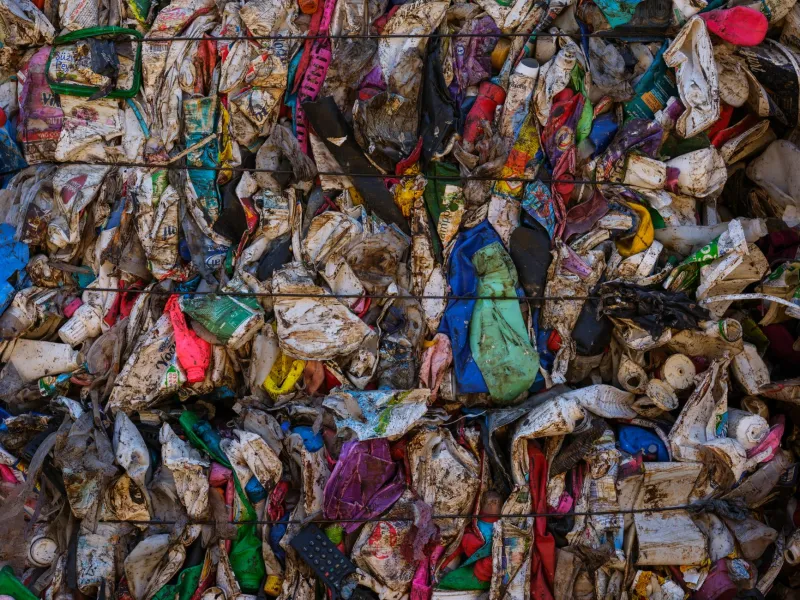
Every year, Americans discard billions of units of packaging that carries some variation of the same reassuring promise: this will return to the earth. The language shifts—biodegradable, compostable, plant-based, earth-friendly—but the implication is consistent. Consumers are meant to understand that choosing this product is an act of environmental stewardship, a small but meaningful gesture toward a cleaner planet.
The problem is that for a significant portion of this packaging, that promise is not just overstated. It is, in many documented cases, functionally false.
What "Biodegradable" Actually Means—and Doesn't
The term biodegradable has no single, enforceable legal definition under U.S. federal law. The Federal Trade Commission's Green Guides offer some guidance, advising that biodegradability claims should only be made when a product will completely break down within a reasonably short period of time after customary disposal. But "reasonably short" is itself undefined, and the Green Guides carry no criminal enforcement mechanism. Manufacturers who stretch or distort these claims face, at most, the possibility of an FTC complaint—a deterrent that has proven spectacularly insufficient.
The result is a marketplace where the word biodegradable can appear on packaging that will persist in a landfill for fifty years or more. Laboratory conditions used to justify these labels often involve precise combinations of heat, moisture, microbial activity, and oxygen that bear little resemblance to the anaerobic, moisture-deprived interior of a compacted municipal landfill. In that environment, even organic matter—food scraps, paper, yard waste—decomposes at a fraction of its theoretical rate. Packaging engineered to biodegrade under ideal conditions simply does not receive the conditions it requires.
The Compostable Certification Problem
Compostable packaging is frequently held to a somewhat higher standard, with certifications from organizations such as the Biodegradable Products Institute (BPI) requiring that materials break down within a defined timeframe in industrial composting facilities. On its surface, this sounds meaningful. In practice, it creates a different category of consumer confusion.
Industrial composting facilities—the high-temperature, carefully managed operations capable of processing certified compostable packaging—serve a minority of American households. Estimates suggest that fewer than half of U.S. residents have access to municipal composting programs, and the majority of those programs do not accept compostable packaging even when it carries a certification. The packaging is either rejected at drop-off sites or, more commonly, placed in the trash by consumers who lack any other option.
Once that certified compostable cup or clamshell container enters the conventional waste stream, it is no longer in an environment capable of activating its biodegradable properties. It travels to a landfill, where it may take decades to break down—and where, in the interim, it behaves much like the petroleum-based plastic it was marketed as replacing.
Fragmentation: The Microparticle Problem Nobody Is Advertising
Perhaps the least-discussed consequence of mismanaged biodegradable packaging is what happens when it does begin to degrade—but incompletely. Materials that partially break down in natural environments, including waterways, coastlines, and soil, do not always mineralize cleanly into carbon dioxide and water as the marketing implies. Instead, they fragment.
These fragments—sometimes categorized alongside conventional microplastics, sometimes studied separately as "bio-based microparticles"—have been detected in river sediment, agricultural soil, and marine ecosystems across the United States. Researchers at several institutions have raised concerns that bio-based polymers, including polylactic acid (PLA) and certain starch blends, may carry their own suite of chemical additives, plasticizers, and processing agents. When these materials fragment and enter soil systems, the downstream effects on microbial communities, plant uptake, and ultimately the food supply remain incompletely understood.
This is not a reason to dismiss the category entirely. It is, however, a reason to demand far more rigorous science before allowing manufacturers to market fragmentation as a form of environmental benefit.
How Manufacturers Exploit Consumer Goodwill
The biodegradable packaging industry has grown substantially in response to genuine consumer demand for sustainable alternatives. That demand is legitimate, and it deserves to be met with integrity. What it frequently receives instead is a sophisticated exercise in label engineering.
Consider the anatomy of a typical claim: a packaging manufacturer develops a material that meets a certification standard under controlled conditions, attaches a leaf-adorned logo to the finished product, and supplies retailers with marketing language that emphasizes the environmental story. The retailer passes that language to consumers. The consumer makes a purchase decision based on information that is technically defensible but practically misleading. The packaging ends up in a landfill. The manufacturer reports strong sustainability metrics.
None of this requires deliberate deception at any single point in the chain. The system is structured to reward the appearance of environmental responsibility rather than its substance. Certifications that were designed to encourage genuine innovation have, in a significant number of cases, become tools for competitive differentiation with limited real-world accountability.
What Genuine Reform Would Require
Addressing this problem is not a matter of banning biodegradable packaging or discouraging innovation in sustainable materials. The category holds real promise, and several emerging materials do demonstrate meaningful end-of-life performance even outside of ideal conditions. The issue is accountability, and the path forward requires several specific interventions.
First, the FTC's Green Guides need statutory backing. Voluntary guidance that companies can ignore without consequence is not regulation—it is a suggestion. Congress has the authority to require that biodegradability and compostability claims be substantiated by third-party testing under conditions that reflect actual disposal environments, not laboratory ideals.
Second, composting infrastructure in the United States must be treated as a public health and environmental priority. Certifying packaging as compostable while failing to build the systems necessary to process it is a policy failure with direct environmental consequences. Federal investment in municipal composting capacity, combined with clear labeling requirements that inform consumers whether their local system accepts a given material, would dramatically reduce the gap between label promise and real-world outcome.
Third, consumers deserve access to plain-language disclosure. A packaging label that reads compostable in industrial facilities only—not accepted in most curbside programs is meaningfully more honest than a green leaf and the word compostable. Standardized, mandatory disclosure language would allow Americans to make genuinely informed choices rather than relying on marketing aesthetics.
Choosing More Carefully in the Meantime
While systemic reform works its way through legislative and regulatory channels—a process that rarely moves quickly—consumers can take steps to protect themselves from the most egregious misdirection.
Look beyond the label. Research whether your municipality operates or accepts materials from an industrial composting program, and whether that program accepts the specific material in question. Treat claims of biodegradability with the same skepticism you might apply to any unverified health claim. Prioritize packaging that reduces material use altogether over packaging that promises a clean end-of-life story it cannot reliably deliver.
At Purity Solutions, we believe that a cleaner planet is built on honest information, not aspirational branding. The biodegradable packaging industry has produced genuinely useful innovations, and it has also produced a great deal of greenwashing dressed in earth tones. Distinguishing between the two is not cynicism—it is the foundation of any meaningful environmental commitment.

